In the Summer, Not in the City…

Summer is fast approaching! That means summer internships, summer jobs, and summer vacations--all of which might take you out of town until the leaves start falling. Here at the library, we’re all for tanning on the beach, but please don’t forget to take care of some library R & R--Return and Renew!

  • Before you leave for the summer, return any books you no longer need to the library. You can return books at Circulation or at one of the drop boxes—there is one in MSE outside of the guard’s desk and one in the BLC in the vestibule of the B-level entrance.
  • If you still need your books, renew them! You can renew online through your library account. You can also use your library account to see a list of everything you still have checked out. If you have trouble renewing your books, contact circmail@jhu.edu.
  • Any books you choose to keep are still subject to recall. Leave those books somewhere accessible so that they can be returned if needed. If someone recalls a book, you will have ten days to return it.
  • Don’t forget to return dvds, reserves, temporary locker keys, headphones, chargers, etc. These items cannot be checked out for an extended time period.
  • Don’t forget to return any Interlibrary Loan materials you might have before leaving campus. Check your ILL account online to see if renewals are possible for your items.

Remember the 2 R’s, and you’ll be able to have the more traditional R’s in peace: rest and relaxation. And if you are here this summer, catch an O’s game or two, and, either way, remember that the library is here to help you all year round! If you need anything always feel free to Ask a Librarian.

Celebrate Pleasant Living at FlowerMart!

Baltimore! It’s the land of pleasant living! And what’s more pleasant than spending a lovely Saturday perusing flowers, eating deliciously sugary lemon sticks, and ambling around a historic neighborhood? That’s right, all ye denizens of Baltimore, FlowerMart is occurring this Friday and Saturday in Mount Vernon Square, and the George Peabody Library is hosting events  both fun and enlightening in honor of this esteemed Baltimore tradition.

There will certainly be moments of whimsy, daring displays of creativity, and wonderful botanical discoveries to be had by all! Even if flowers aren’t your thing, stop by the Peabody on Saturday, May 4th and view our Stephen Crane exhibit. Enough build up, right? Well, here’s the schedule for events at the Peabody Library:

Saturday, May 4, 11am-5pm

  • 12pm: Collection Spotlight Chat: Learn about Sachse's monumental Bird's Eye View of the City of Baltimore (1869)
  • 1pm: 20 Minute Talk: Learn about the Peabody Library and its Collections
  • 2pm: Classical guitar concert featuring Yisak Lee (concert will take place in the Exhibition Gallery)
  • 3pm: 20 Minute Talk: Learn about the Peabody Library and its Collections
  • 4pm: Collection Spotlight Chat: Learn about Sachse's monumental Bird's Eye View of the City of Baltimore (1869)

Annual Reviews Comes to the Rescue!

Ever felt overwhelmed by the amount of information you get when researching for that big term paper? Wouldn't it be nice if someone could summarize the existing scholarship for you so that you could get a quick grasp on what has already been said and done?

Well, if you are working in a field of science or social science and looking for a nice, trustworthy synthesis of the published scholarship on a research topic, Annual Reviews could be just the thing you need. What is Annual Reviews? Annual Reviews is a non-profit publisher specializing in publishing a series of review journals in (currently) 41 fields and disciplines in sciences and social sciences. Each review journal, such as Annual Review of Public Health, publishes review articles written by leading scholars in the field that summarize the major developments over the past few years (sometimes decades) on some of the key topics in the field. These review articles are useful for all researchers, neophytes through seasoned veterans. They provide a convenient way to keep your knowledge up to date about current research in your field; and if you are new to the field, these articles could serve as an excellent introduction.

For example, if you are working on a paper about public health in China, you can start your search with Annual Reviews. Type in "health and China," and the first hit you get is an article called "The Current State of Public Health in China" by Liming Li (Annual Reviews of Public Health, April 2004). In a compact and easy to read style, the article summarizes the major research on the topic since the 1920s. The article consists of four sections: History and Achievements, Establishment of the Chinese Center of Disease Control, New Challenges for Public Health in China, and Prospects, followed by a list of 20 cited sources. With this article in hand, you will be way ahead of the game, compared with your peers who are probably drowning in the millions of Google hits.

But this is not all. Annual Reviews is just one of many tools that the library has to help Hopkins students become better, more efficient researchers. Be sure to talk to the librarian assigned to your academic department, a.k.a. an Academic Liaison Librarian. They are the experts in research tools for your field of study and they would be more than happy to show you all the cool tools to jump start your research.

Two centuries of songs

Strike up the band! The Sheridan Libraries are happy to announce a major upgrade of our popular Levy Sheet Music Digital Collection. While the content is the same as in the previous version, we have redesigned its user interface to include several new search and display features. Lester S. Levy (Johns Hopkins B.A., 1918), a Baltimore hat manufacturer and amateur pianist, started collecting sheet music in the 1930s.  By the 1970s he had collected almost 30,000 titles and written several books on the subject. In 1987 Mr. Levy generously donated his entire sheet music collection, as well as his collection of other music memorabilia, to his alma mater. The Sheridan Libraries digitized the sheet music collection and made it available to the public in the late 1990s.

The refreshed look of the digital collection includes a single search box placed front and center, three browsing options on the top page, and an updated graphic design. If you dig a little deeper, you will find some new options such as faceted searching (narrow your results set by date, composition type, etc.) and multiple display modes. By clicking on the three boxes in the upper-right corner of a search results screen, you can display covers plus some descriptive information, covers only, or titles only. This is very handy if you are looking for a specific title or for an interesting cover illustration. The new interface is also optimized for mobile devices and allows navigation through gestures such as the swipe.

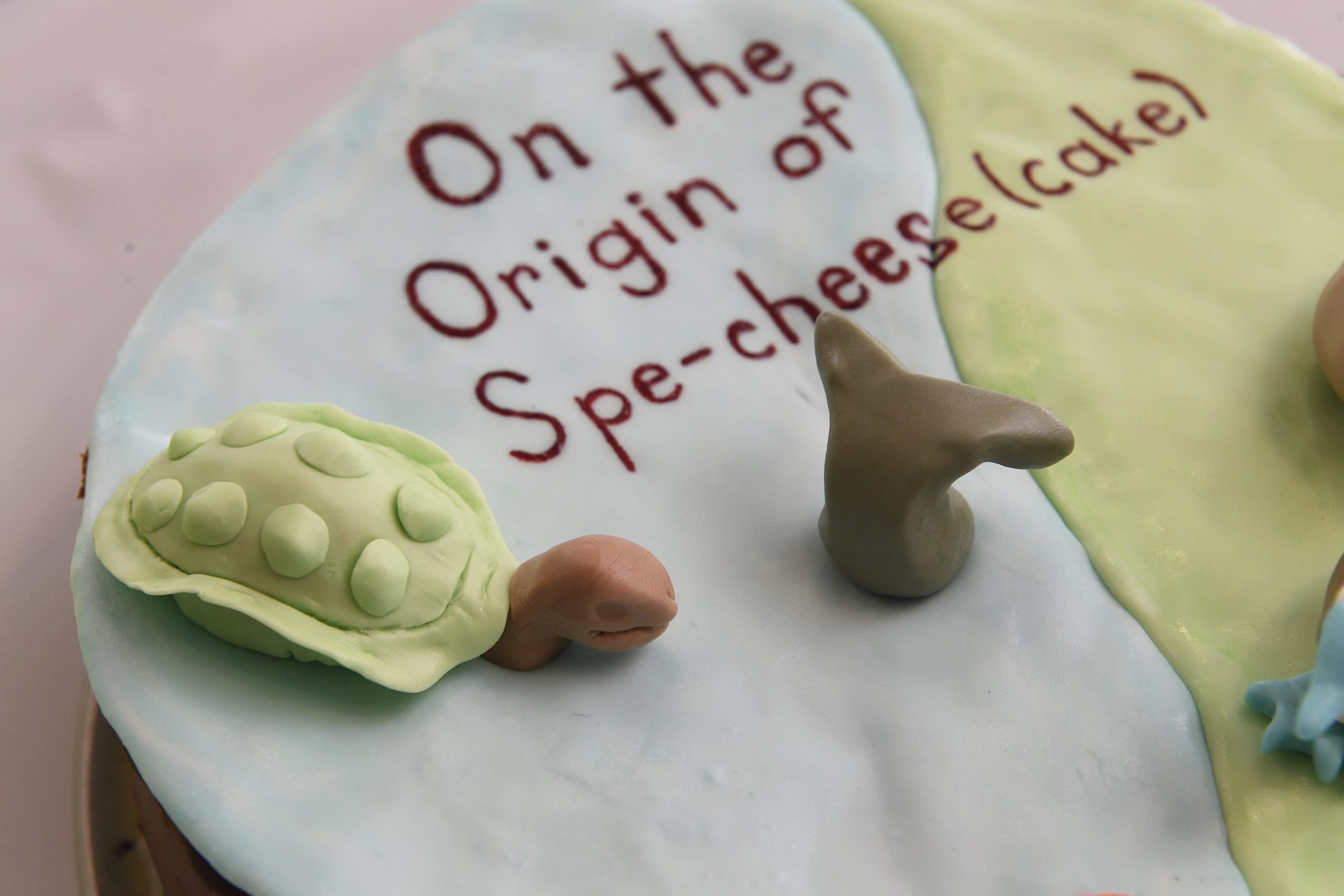
The Levy Sheet Music Collection appeals to a much broader audience than musicians or musicologists. Mr. Levy assembled a treasure trove of popular songs that document American life in the 19th- and early 20th-centuries. Historians might be interested in topics such as presidential elections, the temperance movement, and the rise of the railroads. Sociologists can study how minority groups such as the Romani or African Americans were depicted in popular culture. Art historians can savor the rich illustration styles of subjects such as flowers or horses. And who would have suspected that there were popular songs about Darwin's theory of evolution? This collection truly has something for everybody.

What’s New On A Level

If you’ve been curious about the sounds of bookshelves being hung, at the sight of carts of books shifted from points A to B, and at the appearance of things in flux lately on A Level, we have an explanation for you. Changes are happening to our physical layout at the south end of that level which are designed to make searching for reference, US Government, IGO and NGO publications, legal monographs, maps, and atlases easier. With the new stacks map feature in Catalyst (pictured below), books and documents are being rearranged into a more compact, efficient layout.

Our plan:

  • Consolidate similar materials (Government Printing Office, international publications, law monographs) in easier-to-search proximity
  • Provide more convenient locker access in high-traffic areas
  • Relocate the M Level Reference print material to A level stacks

Shifting the existing documents and monographs to the east and south ranges to accommodate M level reference volumes has been ongoing for six months or so and is nearly complete. Lockers have recently been installed facing the rest rooms, moving the Supreme Court materials back into the KF law filing order.

MSE Technical Services will be amending location information on General Reference books that will then be book-trucked down to their new A-Level abode over the next few weeks!

So, there are new things and familiar things; this is what it will look like by the summer: Continue reading

2013 Student Book Collecting Contest Winners Announced

Congratulations to the winners of the 2013 Betty and Edgar Sweren Student Book Collecting Contest. The annual competition, which is sponsored by the Friends of the Libraries and was endowed in 2007 by longtime Friends Betty and Edgar Sweren, recognizes the love of books and the art of shaping a thoughtful and focused book collection.

The contest is open to all registered Johns Hopkins University students, and entrants must submit a bibliography of up to 50 items and an essay describing the collection.

“This contest is one of the highlights of the year at the libraries,” said Winston Tabb, Sheridan Dean of University Libraries and Museums. “We are given the opportunity to learn about some fabulous collections and to meet the truly fascinating individuals from across the university who created these very personal book collections. I want to thank all who entered and to congratulate this year’s winners.”

First prize for the undergraduate division was awarded to Lily Boettcher, from the Krieger School of Arts & Sciences, for her collection The Publication of American Values and the Formation of “Nation,” 1870-1915. There was a tie for first prize in the graduate category, with Krieger School student Amanda Zecca and Elisabet Pujadas, a student at the School of Medicine and the Whiting School of Engineering, each receiving top honors for their respective collections, From Berkeley to Black Mountain: Avant-Garde Poetry, 1945-1965 and Deconstructing Santiago Ramón y Cajal. Boettcher, Zecca, and Pujadas each received $1000 for their winning entries.

Second prize in the undergraduate category was awarded to Joseph Shaikewitz, from the Krieger School of Arts & Sciences, for How Do You Spell Contemporary?: Defining, Discovering, and Displaying Today’s Art World. Janet Jai, also from the Krieger School, garnered second prize in the graduate division for poemArt and Its Predecessors (Finding Out Where I came From). Both Shaikewitz and Jai were awarded $500. There were no third place winners in either category this year.

“We are delighted that the overall quality of the entries not only has increased every year, but also that the 2013 event certainly has produced a bumper crop of exceptional merit, resulting in a graduate division first place tie for two especially remarkable and unique collections,” said Betty Sweren.

Selections from this year's winning entries will be on display on M-level of the Milton S. Eisenhower Library through July 1.

Shakespeare’s Birthday

William Shakespeare, poet and playwright, was baptized on April 26th, 1564, in Stratford-Upon-Avon. Since his actual date of birth is not known, his birthday is traditionally celebrated on April 23rd, which is ironically the date that he died in 1616. Shakespeare unquestionably shaped the English language with his poetry and his dramatic works, which encompass histories, comedies, and tragedies. He was successful during his lifetime, but his fame rose even more during the 19th century, and he is still very present in our contemporary world, his works being actively studied, adapted, and performed to this day. British schools are even planning to introduce five-year old children to the study of Shakespeare.

The Sheridan Libraries hold many resources on Shakespeare. For example, the Garrett Library, situated in the wonderful Evergreen House and Museum, contains all four Shakespeare folios and three quartos, one of which is an annotated playhouse copy of Hamlet that belonged to the actor John Ward. Our library also provides access to the Complete Cambridge Companions database, with a nice array of resources on Shakespeare.

Home to the Royal Shakespeare Company, Stratford-Upon-Avon draws visitors every year for events and exhibitions related to the Bard. His plays were performed in London in the Globe Theater, a reconstruction of which is still present near its original location. If you cannot afford to cross the Atlantic in time but would like to celebrate Shakespeare’s birthday appropriately, the not-to-miss library on all things Shakespeare this side of the Atlantic is the Folger Shakespeare Library in Washington, D.C. Situated on Capitol Hill, it is a research and education center and offers many events and programs, including an annual open house to celebrate his birthday. Here are a few more possibilities, courtesy of the Huffington Post. They include a “Talk like Shakespeare Day” and an annual Shakespeare drama competition for high schools.

However, I think that my own way to celebrate the Bard’s birthday would be to sit with a cup of tea and slice of cake and listen to these wonderful archived resources of Orson Welles’ performances. Enjoy!

WebWise 2013

This year as usual, just before the end of winter, Baltimore hosted the WebWise Conference.

Held under the aegis of the Institute of Museum and Library Services (IMLS) and also sponsored by the Roy Rozenzweig Center for History and New Media, the event is a yearly gathering of professionals from libraries, archives, museums, system sciences, and various universities and cultural institutions. It comprises three days of lectures, workshops, sessions, and networking. Attendees learn about recent research in digital technology and reflect on its impact on library and museum services.

IMLS Grant recipients come to showcase their projects. This year the conference adopted a mostly interactive and participatory format, with many pre-conference sessions and workshops by small groups.

The keynote speaker this year was Audrey Watters, who writes the Hack Education blog. During her talk, Whose Learning is It, Anyway?, with a nod to the improv show Whose Line is It, Anyway?, Watters reflected on the links between improvisation and use of technology in education, research on artificial intelligence, and the growing MOOC initiatives.

Among the many workshops and project sessions, there was a presentation on Makerspaces. Inspired by Hackerspaces, Makerspaces are learning environments sometimes found in libraries and museums providing networks, learning labs, training and support communities, and hardware and software tools.

All of this made me think about ways JHU is engaged in the "webwise" world. For example, Hopkins' own Digital Media Center helps students with media, art, and technology-oriented projects, the likes of which were discussed at the conference. Similarly, the Libraries' Center for Educational Resources (CER) offers many programs for faculty, including a technology fellowship grants program. Faculty and teaching assistants can turn to the CER for consulting in technology and pedagogy.

The Sheridan libraries recently added the Brody Learning Commons (BLC) as an additional venue for educational activities. Apart from its lounges and reading rooms, the BLC offers “smart rooms” for group study, teaching, and seminars.

Have you tried its Balaur? No, not the mythological beast from Romanian legend, but an interactive visualization wall: the result of a collaboration between the Libraries and JHU’s Computer Science department. It's heartening to know that the kind of innovation showcased at WebWise is happening right here!

Another highlight was the Digital Preservation workshop with Robert Horton, currently from IMLS and formerly the State Archivist for the State of Minnesota, exploring the costs and benefits of digital preservation, along with pertinent legal and policy considerations and the possibilities of collaboration between institutions. He mentioned the Digital Preservation Outreach & Education program of the Library of Congress and also touched upon the UELMA, a law that addresses concerns posed by the publication of state primary legal material online. There are still many challenges in data curation, migration, and ingestion. This is a subject the Sheridan Libraries are addressing in their own Digital Research and Curation Center. Along with Data Conservancy, they also work in partnership with Data Management projects.

A notable feature this year was the Project Partnership Incubator session, which consisted of a discussion about project ideas for one’s institution and of the development of a plan with a facilitator and a small group gathered around a table. I mentioned, as an example, our Schaechter collection, a large portion of which needs to be digitized.

There were many more sessions and project presentations, too many to attend or to mention in this blog post. I wrote in more detail in The Sheridan Libraries Travels blog, if you're interested. Webwise was once again an occasion to exchange ideas and to enjoy meeting colleagues working in this emerging field.

The Icon That Almost Wasn’t There

Mention Baltimore to an out-of-towner and a few things are likely to come up in conversation: The Wire will almost certainly be mentioned; possibly Hairspray. As will crab cakes, Cal Ripken, and Camden Yards.

But odds are that the Inner Harbor, Baltimore's most recognizable feature, will come before all of those other noteworthy topics. For generations of Baltimoreans and visitors alike, the tourist-friendly pavilion of shops, restaurants, and attractions has simply always been part of the landscape. Except it wasn't. And it almost didn't get built at all.

Martin Millspaugh, who served as Chief Executive of Charles Center-Inner Harbor Management Inc., oversaw the development of the Inner Harbor and Charles Center from the mid-1960s to the early 1980s. The project ultimately involved 260 acres of downtown land and almost $7 billion worth of construction. Developers weathered initial skepticism, and the venture’s legacy endures as one of the most influential urban renewal projects ever accomplished.

The Sheridan Libraries recently acquired Millspaugh's papers, more than 50 linear feet(!) of correspondence, writings, subject files, photographs, and books, spanning the mid-1950s to present. After Inner Harbor development reached completion in the mid-1980s, Millspaugh joined famed developer James W. Rouse at Enterprise Development Corporation, a consulting firm that helped cities worldwide plan their own Inner Harbor-like projects. The Martin L. Millspaugh Papers document this transition, including project files related to clients as far-flung as Sydney, Osaka, and Rotterdam.

We are excited to present a panel discussion on the project with Millspaugh and several experts in the areas of real estate, development, and Baltimore history. Join Michael Anikeeff from the Carey School; F. Barton Harvey, former chair of the non-profit Enterprise Foundation; and author and historian Gil Sandler for a fascinating look back at the project and an examination of its legacy --- local and global --- and what the future might hold.

The event takes place at 6 pm  on Thursday, April 18 at the Carey Business School's Harbor East campus.

Space for the event is limited, and we ask that you RSVP to libraryfriends@jhu.edu.

John Pendleton Kennedy: Author, Statesman, Patriot

The following blog post was written by David Farris of The Sheridan Libraries Reserves Department. While a graduate student at the Peabody Institute, David worked as a student employee at the Peabody Library. There, he spearheaded a project to identify and inventory all of the titles included in the gift by John Pendleton Kennedy.

John Pendleton Kennedy (1795-1870) was a leading figure in Baltimore society during the mid-Nineteenth Century. A veteran of the War of 1812, he trained and worked as an attorney and was elected to the Maryland House of Delegates and the U.S. Congress; however, Kennedy’s true passion was writing.

In 1819, Kennedy began his first foray into the literary world in collaboration with Peter Hoffman Cruse on the periodical The Red Book, “a satiric potpourri in the Spectator tradition” (Bohner, 36). In addition to the periodical, Kennedy wrote three novels: Swallow Barn; or, a Sojourn in the Old Dominion (1832), Horse-Shoe Robinson, a Tale of the Tory Ascendency (1835), and Rob of the Bowl, a Legend of St. Inigoes (1838); the anti-Jacksonian satire Quodlibet (1840), Memoirs of the Life of William Wirt (1849) and published several speeches and papers.

He counted among his friends and personal acquaintances George Henry Calvert, James Fenimore Cooper, Charles Dickens, Washington Irving, Edgar Allan Poe, William Gilmore Simms, and William M. Thackeray. In his journal entries from September 1858, Kennedy wrote that Thackeray asked him for assistance with a chapter in The Virginians: Kennedy provided Thackeray with scenic descriptions of the Virginia landscape (Bohner, 219). However, there is a disputed account, perpetrated by John H. B. Latrobe in his article for Appleton’s Cyclopedia of American Biography, in which Kennedy is said to have written the fourth chapter of the second volume of The Virginians (Gwathmey, 131-33).

Additionally, Kennedy was an early champion and later patron of Edgar Allan Poe, whom he met after Poe won a writing contest, of which Kennedy was a judge, sponsored by the periodical, Saturday Visitor (Ridgely, 66).  John Pendleton Kennedy was one of the men chosen by George Peabody, whom he befriended when they served together in the War of 1812, to organize the creation of the Peabody Institute (est. 1857), a gift from Peabody to the city of Baltimore (Parker, 88-89).  Having served with distinction on the Board of Trustees and then as the second president of the Peabody Institute for a decade, John Pendleton Kennedy’s professional and personal association with George Peabody and the Institute led to his decision to bequeath his personal library and manuscripts to the Peabody Institute. In his Last Will and Testament, Kennedy writes:

I give to the Peabody Institute…my library, comprising all my books, pamphlets, maps and charts…and this I give as a special donation from me for the use of the Institute, but not to be kept as a circulating library, by which I mean, not to be taken out of the library rooms of the Institute for ordinary use. I also give to the Institute my several bound volumes of the manuscripts of my printed works, which I have preserved in the original MS. copies, as also my two bound volumes of autograph letters which have been written to me. These I give to the Institute with a special request that they be carefully preserved as a testimony of my interest in its success. (Tuckerman, 485).

JPK: His Legacy and His Influence on the George Peabody Library

Long overshadowed by the recognition and reputation afforded to George Peabody for his generous endowment to the city of Baltimore, John Pendleton Kennedy’s vision and dedication to the founding and initial governing of the Peabody Institute is remarkable. As early as 1841, Kennedy was an advocate for improving the city of Baltimore by establishing “a Free Public Library, a Museum and School of Art and provisions in the way of Lectures” (Tuckerman, 390).   In one of Kennedy’s last reports as President of the Peabody Institute, he wrote:

Our country is yet far from being gifted with a Library completely supplied to meet these requisites and fully to satisfy the research of students in their pursuit of that kind of knowledge which, being of rare demand, does not ordinarily find a place in private collections. And although this impediment to accurate research is gradually lessening before the awakened enterprise of the present time, still, it is our part, as I am sure it was Mr. Peabody’s wish we should so regard it, to use the munificent donation with which we are entrusted in the careful, persistent and intelligent application of our means to the gradual accumulation of everything notable in literature and science as necessary to the pursuits of the scholar. (Tuckerman, 399).

It is this same foresight, wisdom, and his numerous contributions which guarantee John Pendleton Kennedy a prominent and permanent place in the history of the Peabody Institute and the George Peabody Library.